First Findings of Mirror-like Activity in Individual Human Neurons
Research News
|

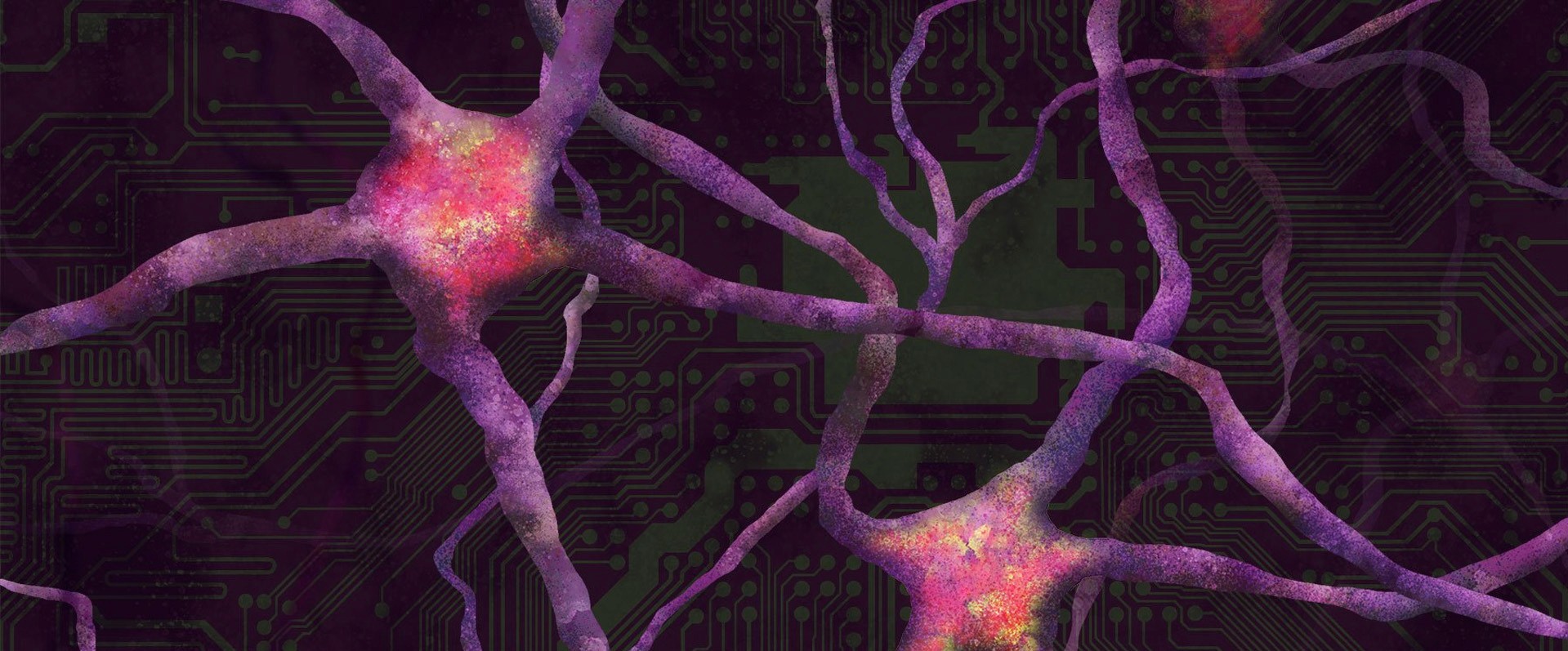
In the early 1990s, researchers studying nonhuman primates discovered a population of brain cells they called "mirror neurons." These specialized brain cells fired when the animal performed an action and also when the animal observed another performing that same action. The discovery of mirror neurons seemed to support the idea that we understand the actions of others by internally simulating them in our own minds. But if that were the case, how would anyone be able to imagine doing something they had never done themselves? How could anyone understand Superman flying, for example, when no human has ever been able to fly?
A new study from Caltech researchers finds the first evidence for mirror-like behavior in individual human neurons and suggests that "mirroring" is context dependent and more intricate than previously believed. The scientists found evidence for mirror activity only in a higher-level brain region that encodes for planning, and intention is critical—mirror activity does not happen automatically and can be suppressed depending on the task at hand.
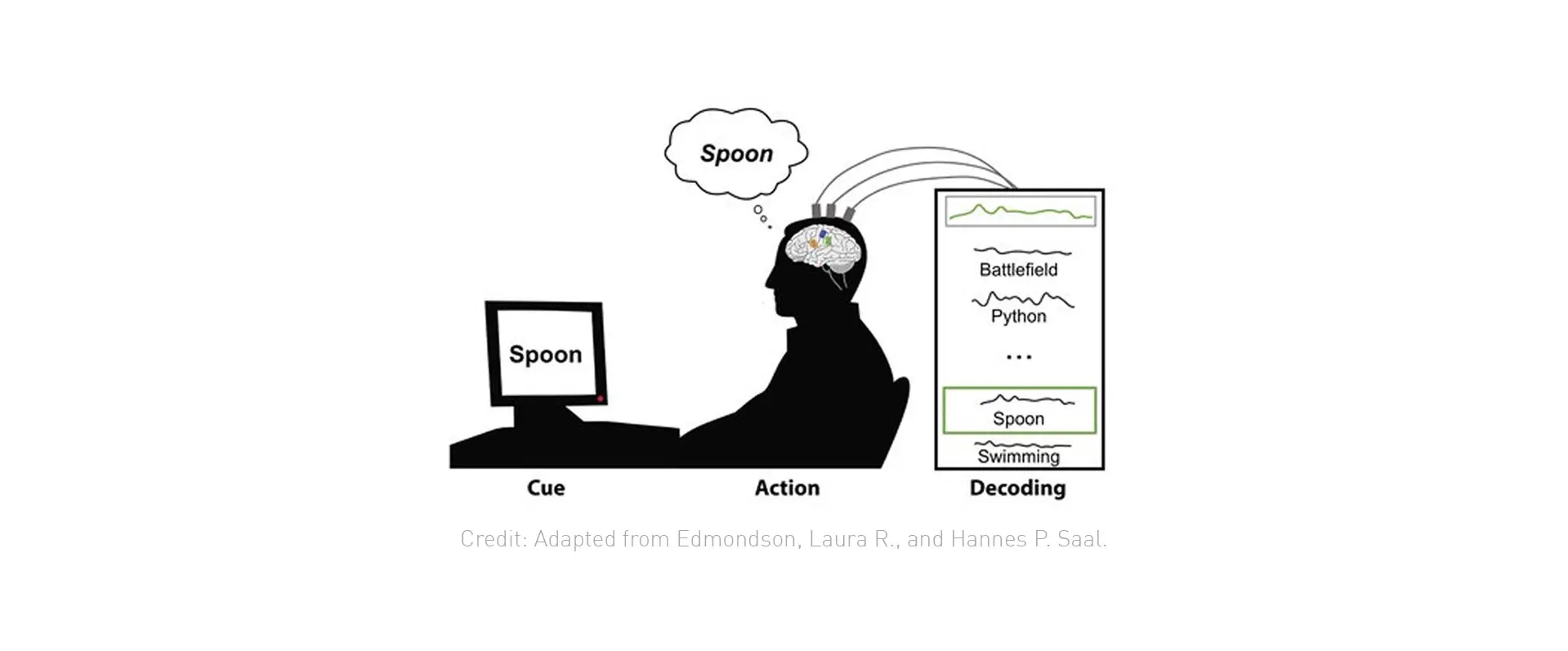
The work informs the development of better brain–machine interfaces (BMIs) that can decode thoughts into robotic actions.
The research was carried out in the laboratory of Richard Andersen, the James G. Boswell Professor of Neuroscience and Leadership Chair and director of the T&C Chen Brain-Machine Interface Center at the Tianqiao and Chrissy Chen Institute for Neuroscience at Caltech. The findings are reported in a paper appearing in the journal Cell on August 20.
"The way that mirror neurons were originally defined, they should respond exactly the same way when observing and executing a particular action, a congruence between observation and execution," Andersen says. "But our findings show that it's not that simple, and behavioral context matters. Mirroring doesn't happen automatically."
For a decade, the Andersen lab has partnered with tetraplegic individuals to develop BMIs that can decode an individual's intended movements and translate them into commands for robotic arms and other apparatuses. The BMIs connect to two specific regions of the brain, called the posterior parietal cortex (PPC) and the motor cortex (MC), through tiny arrays of electrodes that measure neural activity. The PPC encodes for high-level thinking, such as intentions and the transformation of visual information into a motor plan, whereas the MC is more primitive and sends signals to muscles to execute movement.
Read more on the Caltech website.