Commissioned by Tianqiao & Chrissy Chen

MINDS WIDE OPEN

A documentary that shows how we can advance humanity by unlocking the secrets of the mind.

Winner of

London Brand Film Festival Gold Award (2019)

2 Gold and 1 Bronze World Medals for New York Film Festivals TV & Film Awards (2019)

Gold Standard Award for Broadcast and Video, Hong Kong (2018)

3 Gold Awards for Cannes Corporate Media & TV Awards (2018)

WATCH THE FILM
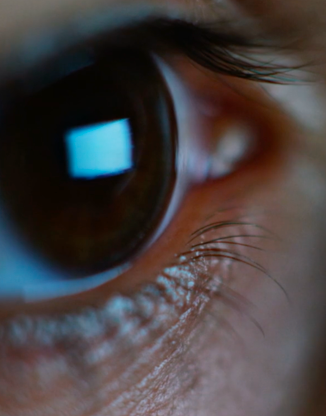
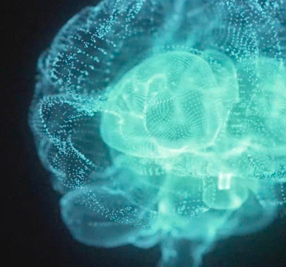
Close-up of a human eyeIllustration of a human brain

The time for neuroscience is now

We are on the brink of unlocking the potential of the human mind and creating a better world.

This film explores how close we are to major breakthroughs that will lead to curing disease, augmenting the brain and helping humanity

We need to act now to realize this potential. It is only by increasing support for young scientists and fundamental brain research that we can take this important step.

Download our infographic to find out more.

11%
Neurological diseases make up 11 percent of the world’s disease burden (not including mental health and addiction disorders).
Society for Neuroscience
100BN
The average human brain has 100 billion nerve cells.
Society for Neuroscience
44%
US federal agencies provided only 44% of the total amount spent on basic research in 2015.
www.sciencemag.org
1000
More than 1,000 neurological and neurodegenerative diseases affect the lives of nearly 100 million Americans.
Putting Brain Power Behind Brain Disease, The New York Academy of Sciences Magazine (November 2011)
121M
Depression affects about 121 million people worldwide.
European Brain Council
11%
Neurological diseases make up 11 percent of the world’s disease burden (not including mental health and addiction disorders).
Society for Neuroscience
100BN
The average human brain has 100 billion nerve cells.
Society for Neuroscience
44%
US federal agencies provided only 44% of the total amount spent on basic research in 2015.
www.sciencemag.org
1000
More than 1,000 neurological and neurodegenerative diseases affect the lives of nearly 100 million Americans.
Putting Brain Power Behind Brain Disease, The New York Academy of Sciences Magazine (November 2011)
121M
Depression affects about 121 million people worldwide.
European Brain Council
11%
Neurological diseases make up 11 percent of the world’s disease burden (not including mental health and addiction disorders).
Society for Neuroscience
100BN
The average human brain has 100 billion nerve cells.
Society for Neuroscience
44%
US federal agencies provided only 44% of the total amount spent on basic research in 2015.
www.sciencemag.org
1000
More than 1,000 neurological and neurodegenerative diseases affect the lives of nearly 100 million Americans.
Putting Brain Power Behind Brain Disease, The New York Academy of Sciences Magazine (November 2011)
121M
Depression affects about 121 million people worldwide.
European Brain Council

The spirit of discovery

We are on the brink of a number of exciting breakthroughs – discover below what’s needed to advance the science and unlock the secrets of the human mind.

Meet the pioneers

These world-leading scientists are advancing brain research around the world.

Richard A. Andersen, PhD

“It takes my breath away every time I see the subject sitting there in his or her wheelchair being able to, just through their thoughts, control robotic limbs or play a virtual piano or type on a virtual keyboard.”

Watch the clip

Richard A. Andersen, PhD

Caltech

Tianqiao and Chrissy Chen Brain-Machine Interface Center Director and Leadership Chair

James G. Boswell Professor of Neuroscience
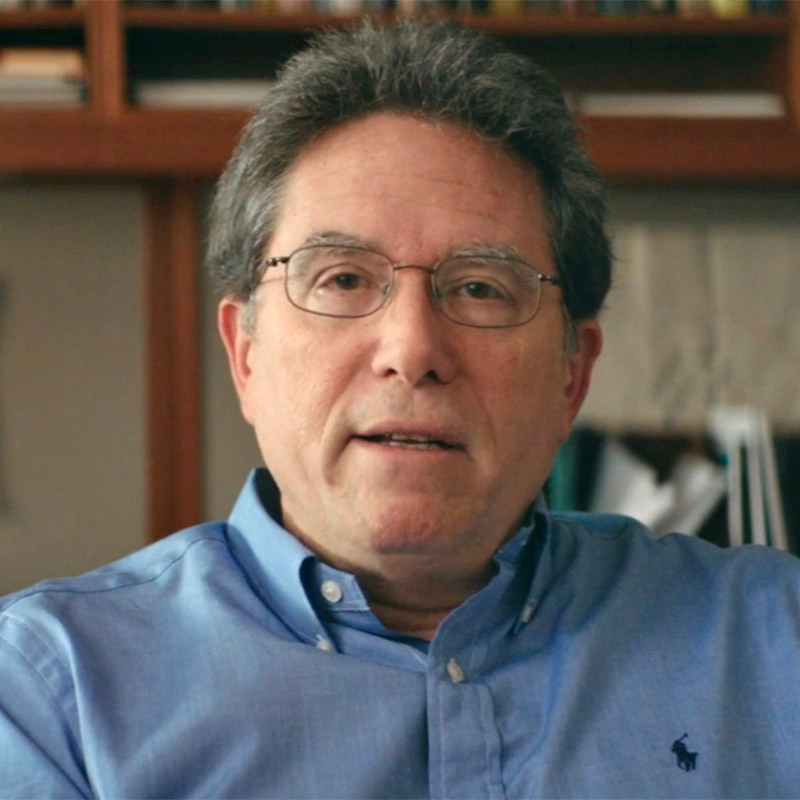
David Anderson, PhD

“The motivation for inquiry into the brain is twofold. One is to satisfy our innate curiosity about how this complex machine works. The other is to try to gain understanding that will help improve human health and welfare in general.”

Watch the clip

David Anderson, PhD

Caltech

Director of the Tianqiao and Chrissy Chen Institute for Neuroscience at Caltech

Diana Bautista, PhD

“The possibilities of understanding and curing disorders, treating psychiatric illness, and then to understand basic science, I think we’re at the tipping point now. The benefits for everyone will be just enormous.”

Watch the clip

Diana Bautista, PhD

University of California, Berkeley

Associate Professor

Department of Molecular & Cell Biology

Helen Wills Neuroscience Institute

Karl Deisseroth, MD, PhD

The human brain is the source of cognition, thought, feeling, emotion, planning. It’s perhaps the most complicated object in the universe, and we don’t really understand how it does what it does. That’s what makes it such a wonderful object to study.

Karl Deisseroth, MD, PhD

Stanford University

Professor of Bioengineering and of Psychiatry and Behavioral Sciences D.H. Chen Professor

Michael E. Greenberg, PhD

“Millions of years of evolution have had [an] impact to make a structure that’s truly amazing; that endows us with the capacity to engage in art, in learning, in communication, in language - the most amazing abilities.”

Michael E. Greenberg, PhD

Harvard University

Nathan Marsh Pusey Professor of Neurobiology and Chair of the Department of Neurobiology

Harvard Medical School Co-Director

Harvard Brain Science Initiative

Harvard University

Sergiu P. Pasca, MD

“I actually did not start by being fascinated by neuroscience. Meeting one of my first patients with autism is what really made a difference. Seeing the struggles of the parents and realizing how complex and puzzling this disorder really was, is what drew me towards the brain and brain disorders.”

Sergiu P. Pasca, MD

Stanford University

Assistant Professor of Psychiatry and Behavioral Sciences

Laura Roberts, MD, MA

“It’s very exciting to be in the field right now. We’ve just got such amazingly creative neuroscientists throughout the world and these very different techniques. Instead of inferring what happens in the brain, we can directly query what’s happening in brain circuits or at the level of the cell that leads to a particular brain disorder.”

Laura Roberts, MD, MA

Stanford University

Chair of the Department of Psychiatry and Behavioral Sciences

Katharine Dexter McCormick and Stanley McCormick Memorial Professor in the School of Medicine

Thomas F. Rosenbaum, PhD

“We have an opportunity now like we’ve had few times before to move forward at a rapid pace, take full advantage of the skills of more and more young people across the world, and to be able to excite them about contributing to the betterment of the human condition.”

Thomas F. Rosenbaum, PhD

Caltech

President

Sonja and William Davidow Presidential Chair

Sir Nigel Shadbolt, PhD

“I remain incredibly excited by Artificial Intelligence. In some respects, it’s the most exciting time to be in the field. I think it’s because we see momentum, a general awareness, levels of funding, levels of actual deployment of real systems, where people can say, that’s actually AI.”

Watch the clip

Sir Nigel Shadbolt, PhD

Jesus College, Oxford University

Principal and Professorial Research Fellow in Computer Science

Robert Tjian, PhD

“I remain incredibly excited by Artificial Intelligence. In some respects, it’s the most exciting time to be in the field. I think it’s because we see momentum, a general awareness, levels of funding, levels of actual deployment of real systems, where people can say, that’s actually AI.”

Robert Tjian, PhD

University of California, Berkeley

Professor of Biochemistry, Biophysics and Structural Biology

Nolan Williams, MD

“Depression is the number one, most disabling condition in the world. Trans-Cranial Stimulation (TMS) allows us to help treatment-resistant patients who don’t normally have treatment options and would allow us to save a lot of lives.”

Nolan Williams, MD

Stanford University

Clinical Assistant Professor of Psychiatry and Behavioral Sciences

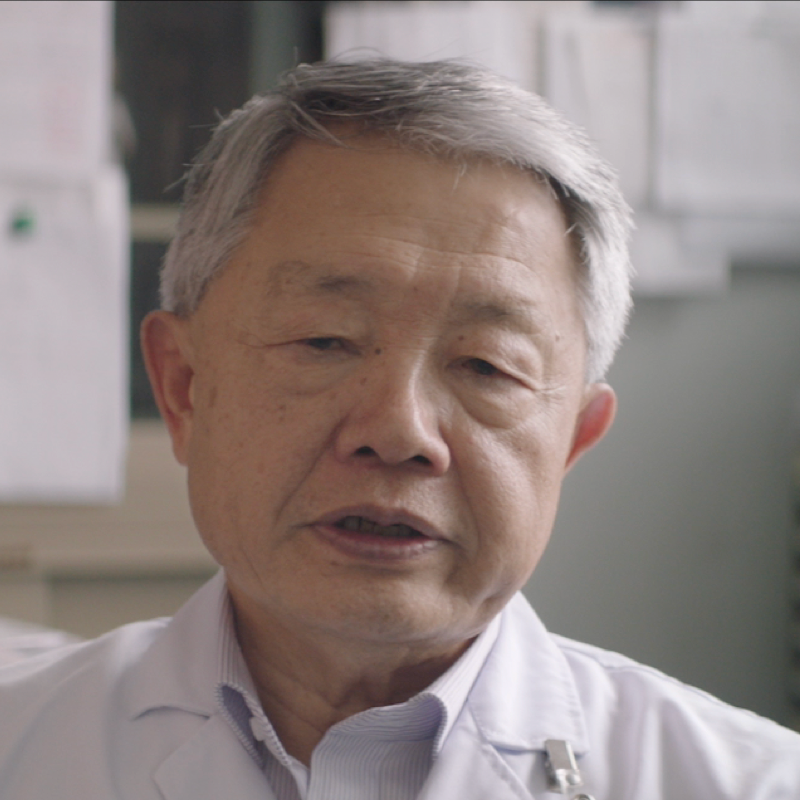
Liangfu Zhou, MD, PhD

“We are faced with more than 500 kinds of brain disease which are not yet resolved such as mental illness, cerebrovascular disease, tumors and trauma. I have performed more than 10,000 surgeries, studied brain and cortex function. Neuroscience is critical to the future development of mankind.”

Watch the clip

Liangfu Zhou, MD, PhD

Huashan Hospital, Fundan University

Vice Chairman of Tianqiao and Chrissy Chen Institute (Shanghai)

Director Department of Neurosurgery

Global excellence

Scientists from some of the most respected institutions all over the world were interviewed for this film.

Berkeley
Stanford
HuaShan
Oxford
Harvard
Caltech
Berkeley
Stanford
HuaShan
Oxford
Harvard
Caltech

Questions?

Frequently Asked Questions

  • Neurological diseases make up 11 percent of the world’s disease burden, according to the Society for Neuroscience, and that doesn’t even include mental health and addiction disorders.
  • Depression affects about 121 million people worldwide[1].
  • In the U.S., more than 1,000 neurological and neurodegenerative diseases affect the lives of nearly 100 million Americans[2].

These diseases and disorders have a direct and obvious effect on the people suffering from them but they also have a tremendous impact on our economy from missed work or reduced productivity

[1] European Brain Council

[2] The New York Academy of Sciences Magazine

Many major breakthroughs in modern times were made by people under the age of 40 (e.g., Einstein, Alexander Graham Bell, Marie Curie, Thomas Edison, Stephen Hawking, etc.). We need to ensure there is a constant stream of fresh thinking and support for young scientists in the field so they can explore and advance their research.

In 2015, US federal agencies provided only about 44% of the total amount spent on basic research in the country. The remaining 56% needs to come from private parties and higher education institutions. While some private companies may be investing in specific applications within neuroscience, it is support for fundamental brain research that is most important because it can lead to huge breakthroughs and quantum steps forward. It was fundamental research, for example, that lead to breakthroughs in DNA, vaccines, solar power and MRIs to name just a few. Support from one company, philanthropist or government agency isn’t enough. We must work together to realize the unparalleled opportunity currently surrounding us.

When Tianqiao and Chrissy first announced that they were focusing their philanthropic efforts on brain science, they were flooded with questions about their choice. They decided to create a short video to address these questions and quickly realized that they had enough exciting content for at least one documentary. They decided to create something that would excite the public about recent advances and show just how close we are to a number of significant breakthroughs. They also wanted to create something could be used by scientists and researcher to make the case that more support is needed from government, philanthropists, businesses and the public if we are to unlock the secrets of the human brain.

Still need help?

EMAIL US

and we will get back to you shortly

Loading...

Cornerstone Partnerships

Documentary

Loading...

AI Prize

AI for Social Good

Chen IPL

Loading...

AIAS 2026

Conference Program

Conference Partners

Conference Reports

About

Founders’ letter

Vision

Chen Scholars Program

Training Programs

Young Talent Collider

Join Us

Team

Newsroom

Chen Institute blog

Newsletter

Annual Report

GrandMirror

© 2026 Tianqiao and Chrissy Chen Institute

Terms of Use

Privacy Policy

Contact us

Newsletter

Subscribe

Loading...

Cornerstone Partnerships

Documentary

Loading...

AI Prize

AI for Social Good

Chen IPL

Loading...

AIAS 2026

Conference Program

Conference Partners

Conference Reports

About

Founders’ letter

Vision

Chen Scholars Program

Training Programs

Young Talent Collider

Join Us

Team

Newsroom

Chen Institute blog

Newsletter

Annual Report

GrandMirror

© 2026 Tianqiao and Chrissy Chen Institute

Terms of Use

Privacy Policy

Contact us

Newsletter

Subscribe

Loading...

Cornerstone Partnerships

Documentary

Loading...

AI Prize

AI for Social Good

Chen IPL

Loading...

AIAS 2026

Conference Program

Conference Partners

Conference Reports

About

Founders’ letter

Vision

Chen Scholars Program

Training Programs

Young Talent Collider

Join Us

Team

Newsroom

Chen Institute blog

Newsletter

Annual Report

GrandMirror

© 2026 Tianqiao and Chrissy Chen Institute

Terms of Use

Privacy Policy

Contact us

Newsletter

Subscribe