Loading...
Loading...
Loading...

Beetles Conquered Earth by Evolving Their Own Biochemical Laboratory

Research News

|
Jun 17, 2024

As organisms diversified on planet Earth, some branches of the tree of life became exceptionally diverse, others far less so. Still others went extinct. Why evolution favored certain groups over others is a long-standing question in evolutionary science.

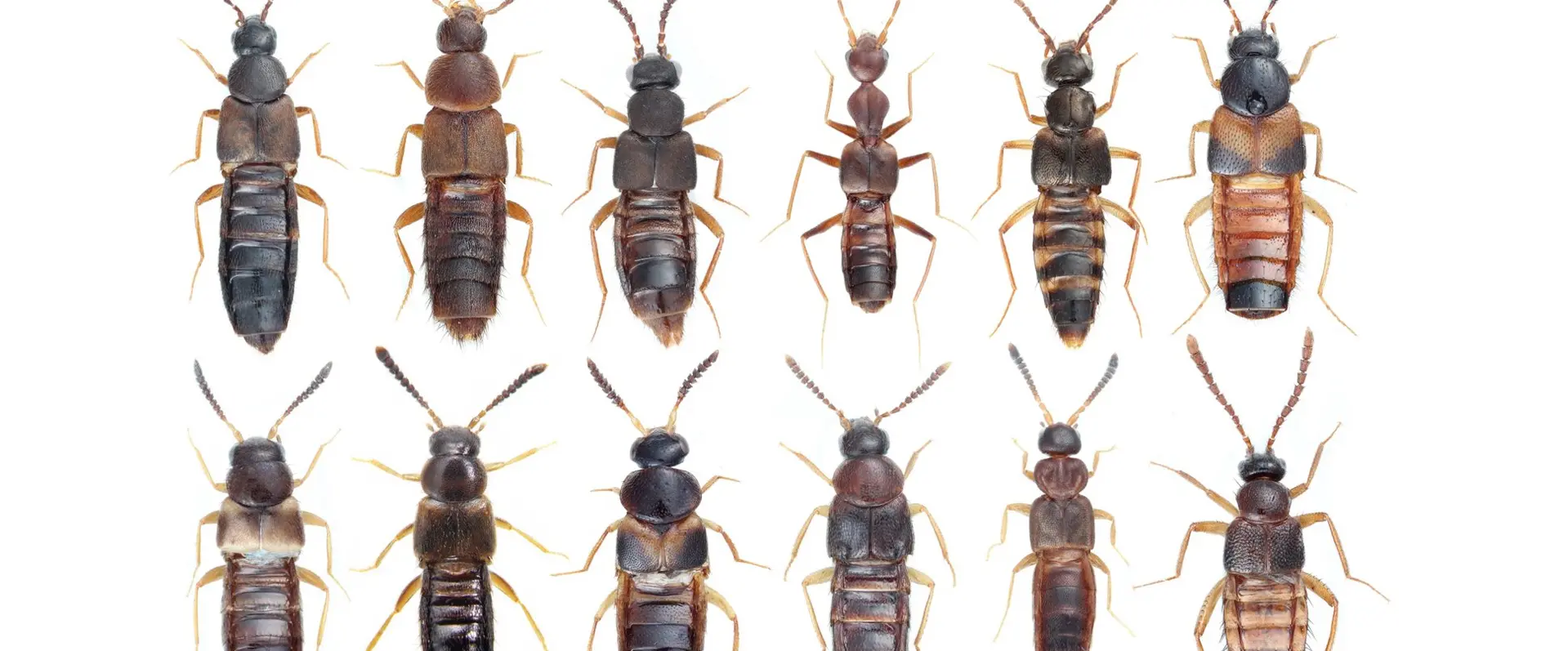
Beetles are the poster child of evolutionary success: about 400,000 species are known—about a quarter of all described lifeforms—and potentially hundreds of thousands more await discovery. But why are there so many? One widely held view is that beetles gained an ecological advantage by evolving elytra, the hardened shield-like structures that protect the flight wings, enabling them to live in many different niches that other insects can’t access. Another hypothesis is that beetles co-evolved with flowering plants. As these plants diversified, so too did the beetles that feed on them.

What drove this remarkable success is the focus of a new study by researchers in the laboratory of Joe Parker, assistant professor of biology and biological engineering, Chen Scholar, and director of Caltech’s Center for Evolutionary Science. Led by former postdoctoral scholar Sheila Kitchen, the study, appearing online on June 17 in the journal Cell, pinpoints evolution of two cell types that form a chemical defense gland within these beetles’ bodies as a catalyst behind their global radiation.

Read more on the TCCI for Neuroscience Website

As organisms diversified on planet Earth, some branches of the tree of life became exceptionally diverse, others far less so. Still others went extinct. Why evolution favored certain groups over others is a long-standing question in evolutionary science.

Beetles are the poster child of evolutionary success: about 400,000 species are known—about a quarter of all described lifeforms—and potentially hundreds of thousands more await discovery. But why are there so many? One widely held view is that beetles gained an ecological advantage by evolving elytra, the hardened shield-like structures that protect the flight wings, enabling them to live in many different niches that other insects can’t access. Another hypothesis is that beetles co-evolved with flowering plants. As these plants diversified, so too did the beetles that feed on them.

What drove this remarkable success is the focus of a new study by researchers in the laboratory of Joe Parker, assistant professor of biology and biological engineering, Chen Scholar, and director of Caltech’s Center for Evolutionary Science. Led by former postdoctoral scholar Sheila Kitchen, the study, appearing online on June 17 in the journal Cell, pinpoints evolution of two cell types that form a chemical defense gland within these beetles’ bodies as a catalyst behind their global radiation.
Read more on the TCCI for Neuroscience Website

Loading...
Loading...
Loading...
Loading...
Loading...
Loading...
Loading...

Cornerstone Partnerships

Frontier Labs

Documentary

Loading...

AI Prize

Chen Scholars Program

Training Programs

Stanford IPL

Loading...

AIAS 2025

Conference Program

Conference Partners

Conference Reports

About

Founders’ letter

Our Philanthropy

Vision

Team

Join Us

Newsroom

Chen Institute blog

Newsletter

Annual Report

© 2025 Tianqiao and Chrissy Chen Institute

Terms of Use

Privacy Policy

Contact us

Newsletter

Subscribe

We're Hiring!

Loading...

Cornerstone Partnerships

Frontier Labs

Documentary

Loading...

AI Prize

Chen Scholars Program

Training Programs

Stanford IPL

Loading...

AIAS 2025

Conference Program

Conference Partners

Conference Reports

About

Founders’ letter

Our Philanthropy

Vision

Team

Join Us

Newsroom

Chen Institute blog

Newsletter

Annual Report

© 2025 Tianqiao and Chrissy Chen Institute

Terms of Use

Privacy Policy

Contact us

Newsletter

Subscribe

We're Hiring!

Loading...

Cornerstone Partnerships

Frontier Labs

Documentary

Loading...

AI Prize

Chen Scholars Program

Training Programs

Stanford IPL

Loading...

AIAS 2025

Conference Program

Conference Partners

Conference Reports

About

Founders’ letter

Our Philanthropy

Vision

Team

Join Us

Newsroom

Chen Institute blog

Newsletter

Annual Report

© 2025 Tianqiao and Chrissy Chen Institute

Terms of Use

Privacy Policy

Contact us

Newsletter

Subscribe

We're Hiring!