Earth's biosphere is brimming with symbiotic relationships: from bacteria that became our cells' mitochondria, to mycorrhizal fungi that help plants grow, to the myriad mites, wasps, worms, and flies that make a living by parasitizing other animals.
Symbiosis often appears to be a one-way street: When it evolves, there is no going back as symbionts become irreversibly locked into relationships with their hosts or partner species. Such "obligate symbioses" are some of the most ancient ecological interactions, with examples dating back hundreds of millions of years, pillars around which the rest of the natural world has evolved.
New research at Caltech sheds light on why symbioses become irreversible but also why these lifestyles are not necessarily an evolutionary dead end.
The research was performed in the laboratory of Joe Parker, professor of biology and biological engineering and director of Caltech's Center for Evolutionary Science, and is described in two papers appearing recently in the journals Cell and Current Biology.
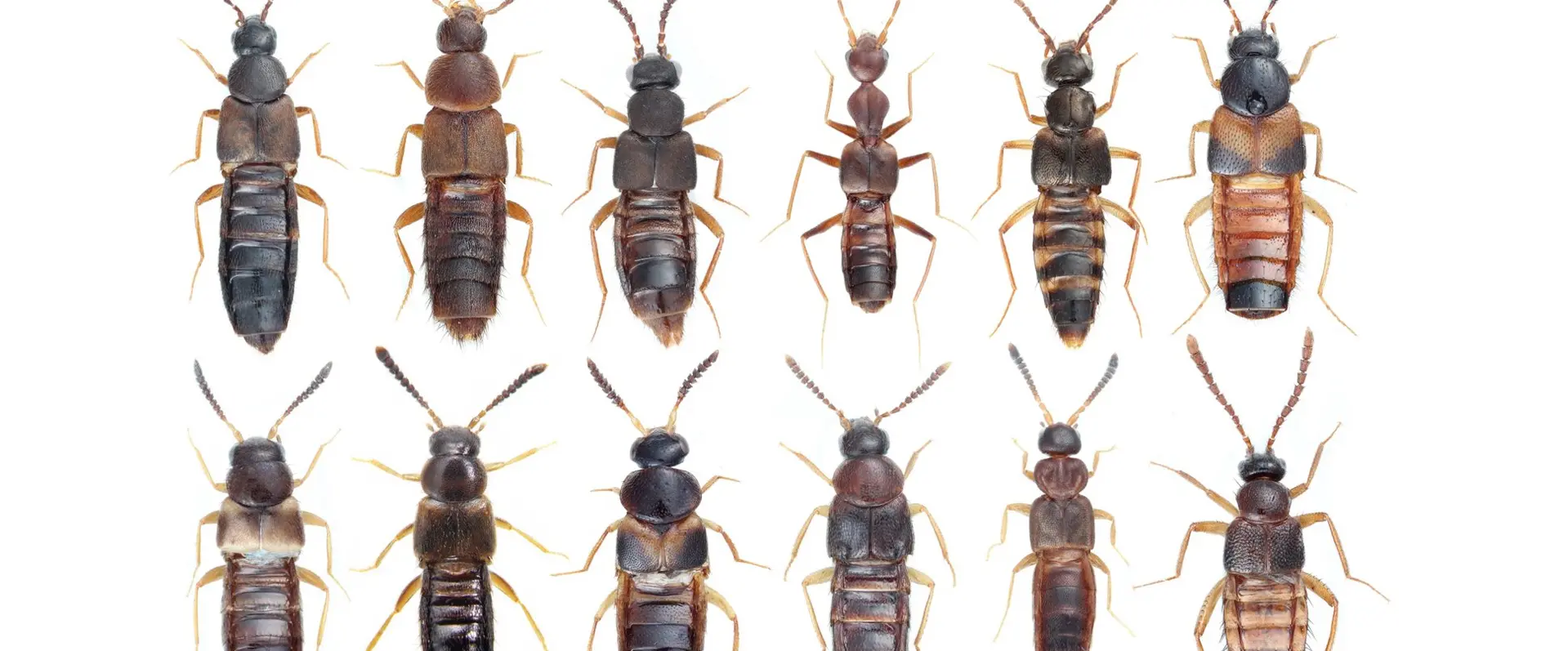
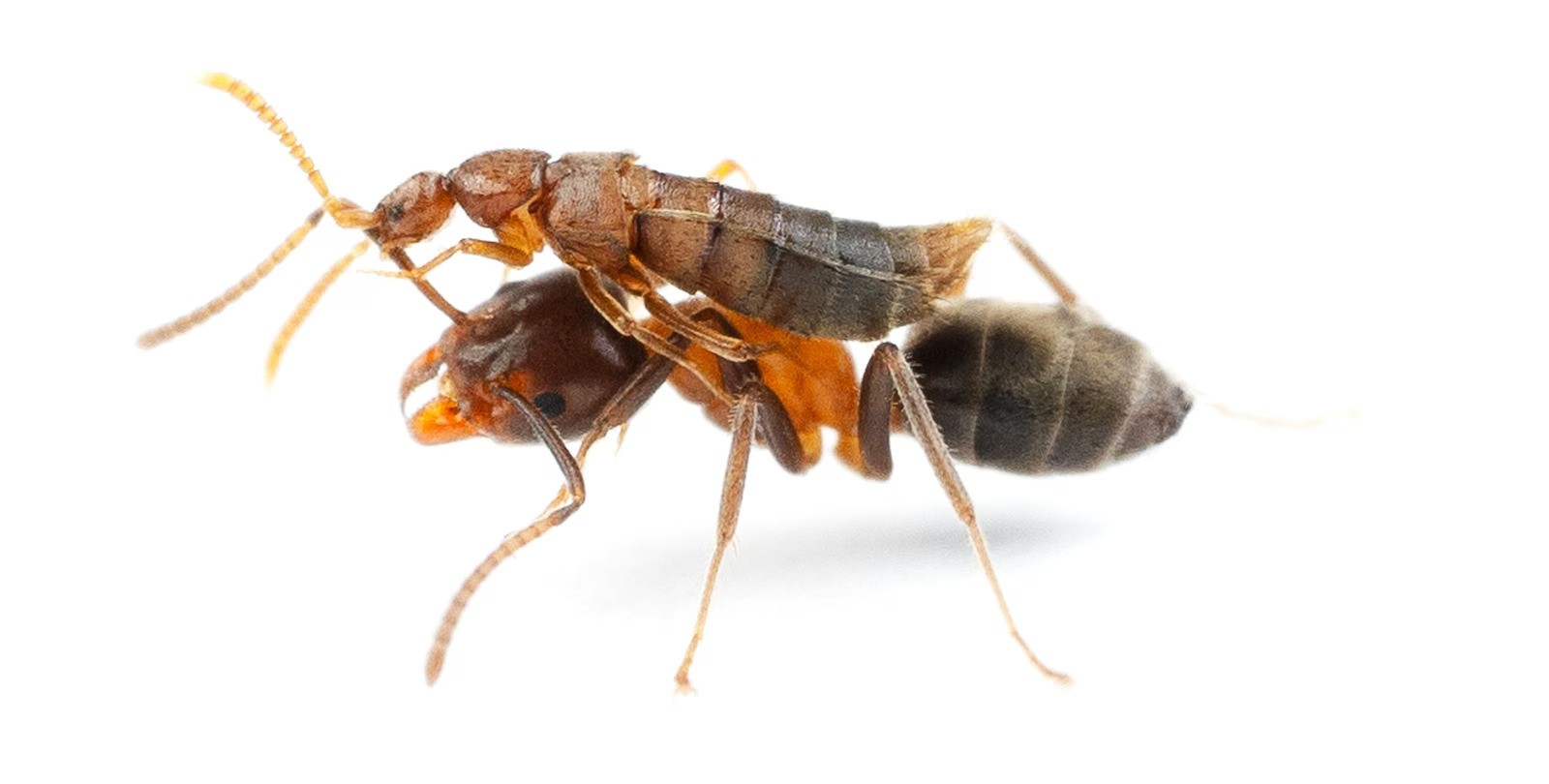
Parker's team has spent eight years studying ant colonies in the Angeles National Forest. This landscape is dominated by an ant species that is integral to the forest ecosystem: the velvety tree ant (Liometopum occidentale). These ants form colonies of millions of aggressive workers, but deep inside them lives a remarkable impostor beetle, named Sceptobius—a symbiotic insect found nowhere but these hostile nests.
Sceptobius is incapable of living outside of the ants' colonies, which are impenetrable fortresses to most other insects. The beetle has evolved a complex relationship with the ant where it is treated as a nestmate rather than attacked and is even fed mouth-to-mouth by the ants. It also feasts on the ants' eggs and larvae, living as a social parasite that exploits the colony, while providing little to nothing in return.
In a new study in the journal Cell, led by former graduate student Tom Naragon (PhD '25), Parker's team asked how Sceptobius can dupe the ants into believing it is one of them. They found that Sceptobius infiltrates colonies by developing an "invisibility cloak," switching off its own pheromones to become a stealth intruder. By doing so, its body becomes a blank canvas onto which it can "paint" the ant's own pheromones, stealing the colony's chemical identity to gain the ants' acceptance. Evolution of this ability has, however, come at a price, as the stealth strategy is likely evolutionarily irreversible.
Read more on the Caltech website.
 |  |
Earth's biosphere is brimming with symbiotic relationships: from bacteria that became our cells' mitochondria, to mycorrhizal fungi that help plants grow, to the myriad mites, wasps, worms, and flies that make a living by parasitizing other animals.
Symbiosis often appears to be a one-way street: When it evolves, there is no going back as symbionts become irreversibly locked into relationships with their hosts or partner species. Such "obligate symbioses" are some of the most ancient ecological interactions, with examples dating back hundreds of millions of years, pillars around which the rest of the natural world has evolved.
New research at Caltech sheds light on why symbioses become irreversible but also why these lifestyles are not necessarily an evolutionary dead end.
The research was performed in the laboratory of Joe Parker, professor of biology and biological engineering and director of Caltech's Center for Evolutionary Science, and is described in two papers appearing recently in the journals Cell and Current Biology.
Parker's team has spent eight years studying ant colonies in the Angeles National Forest. This landscape is dominated by an ant species that is integral to the forest ecosystem: the velvety tree ant (Liometopum occidentale). These ants form colonies of millions of aggressive workers, but deep inside them lives a remarkable impostor beetle, named Sceptobius—a symbiotic insect found nowhere but these hostile nests.
Sceptobius is incapable of living outside of the ants' colonies, which are impenetrable fortresses to most other insects. The beetle has evolved a complex relationship with the ant where it is treated as a nestmate rather than attacked and is even fed mouth-to-mouth by the ants. It also feasts on the ants' eggs and larvae, living as a social parasite that exploits the colony, while providing little to nothing in return.
In a new study in the journal Cell, led by former graduate student Tom Naragon (PhD '25), Parker's team asked how Sceptobius can dupe the ants into believing it is one of them. They found that Sceptobius infiltrates colonies by developing an "invisibility cloak," switching off its own pheromones to become a stealth intruder. By doing so, its body becomes a blank canvas onto which it can "paint" the ant's own pheromones, stealing the colony's chemical identity to gain the ants' acceptance. Evolution of this ability has, however, come at a price, as the stealth strategy is likely evolutionarily irreversible.
Read more on the Caltech website.
| |