Society for Neuroscience 2025 Annual Meeting Report: Neural Dynamics, Computational Models, and the Future of Integrative Neuroscience
Meeting Reports
|
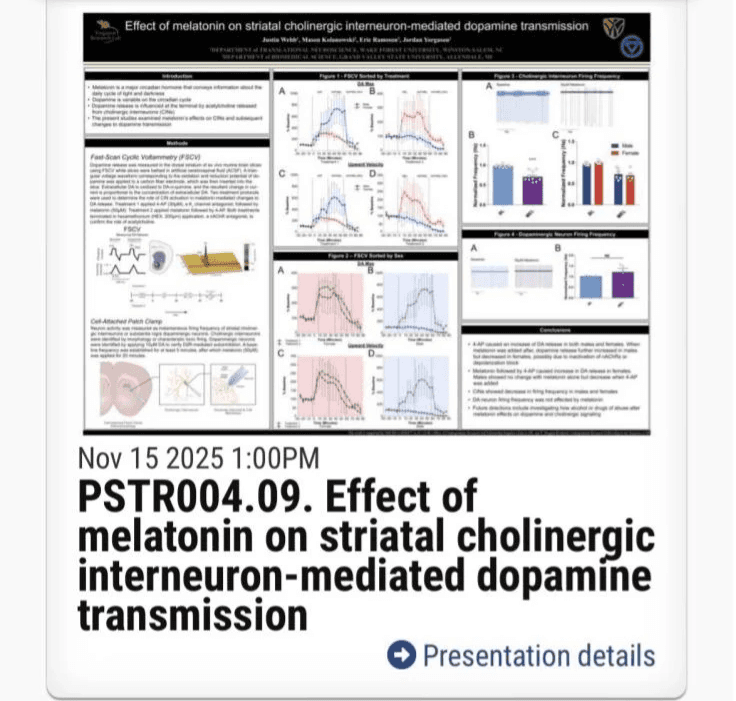
The 2025 Annual Meeting of the Society for Neuroscience (SfN), held from November 15–19 in San Diego, California, represented a landmark gathering for the global neuroscience community. While I participated in the meeting virtually, the digital access to the comprehensive scientific program and extensive presentation materials allowed for a deep engagement with the field's evolving landscape.
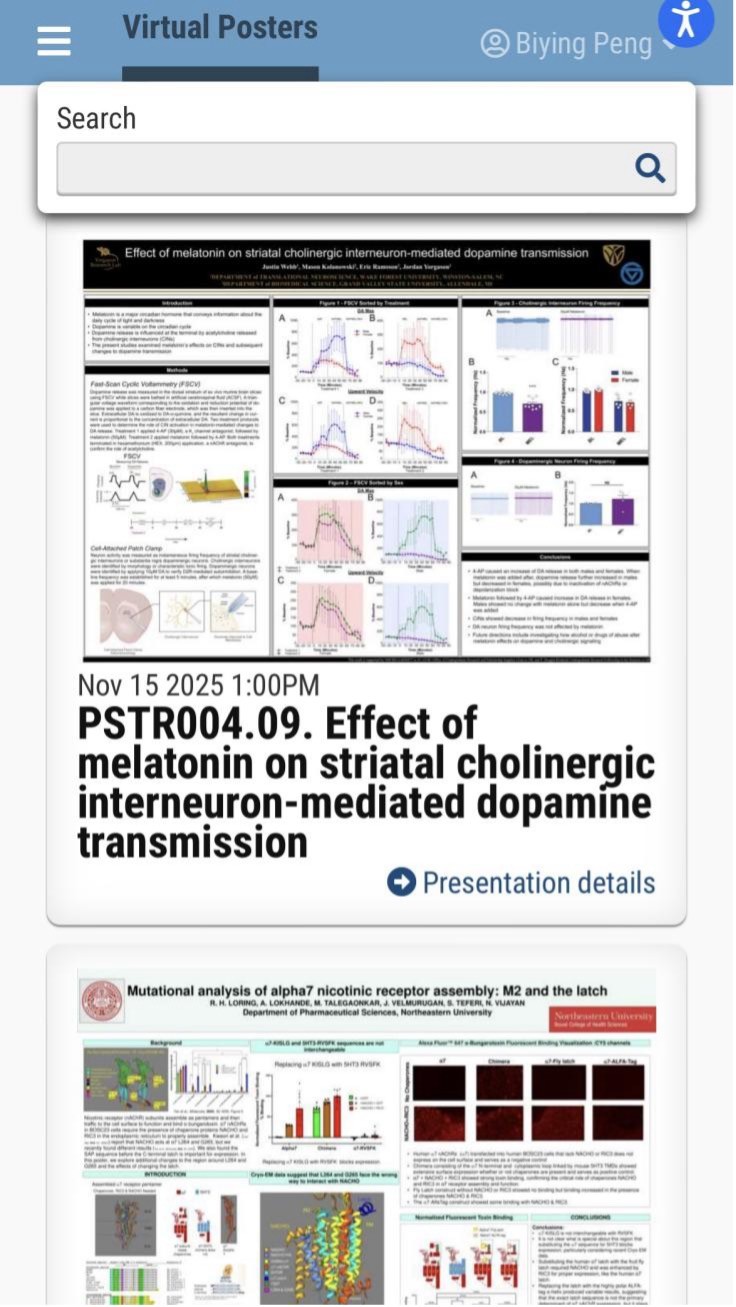
Figure. Screenshot of the SfN 2025 virtual poster platform, illustrating the asynchronous engagement format through which the meeting content was accessed.
This year's meeting was characterized by a profound shift toward computational and systemslevel integration, moving beyond the description of isolated phenomena toward the construction of predictive, highdimensional models of brain function. My participation focused on the intersection of neural dynamics, cognitive architectures, and the burgeoning role of artificial intelligence, which together signal a new era of "computationalfirst" neuroscience.
Neural Dynamics as a Computational Substrate
A primary theme emerging from the scientific sessions is the conceptualization of cognition not as a product of localized brain regions, but as an emergent property of distributed neural dynamics. As proposed by researchers such as Earl Miller, the traditional view of the brain as a series of hardwired connections is being replaced by a model where rhythmic oscillations and electric fields coordinate largescale neural activity. This perspective suggests that the brain utilizes these oscillations to organize information flow, effectively functioning through energyefficient analog computing. This dynamic framework provides a necessary foundation for understanding how decisionmaking is distributed across multiple cortical and subcortical areas. Rather than a central executive, the program highlights how perceptual choices evolve as trajectories through highdimensional neural state spaces, where population dynamics across the brain achieve consensus through synchronized activity.
The Architecture of Cognitive Maps and Temporal Coding
Building upon these dynamical foundations, the meeting extensively explored how the brain encodes abstract structures like space, time, and relational logic. A significant area of focus involved the prefrontal cortex and its role in hosting a "language of thought" through abstract relational maps. These internal models allow the brain to generalize learned task structures to new environments, representing a sophisticated form of neural computation. This line of research is deeply connected to the study of temporal context and "time cells," which suggest that the brain treats time as a navigable dimension similar to physical space. By utilizing shared computational principles—such as attractor networks—the brain can construct a unified "coordinate system" for both episodic memory and spatial navigation, allowing us to traverse mental representations of the past and future with the same machinery used to navigate the physical world.
Bridging Biological Plasticity and Artificial Intelligence
One of the most innovative threads of the 2025 meeting was the bidirectional exchange between experimental neuroscience and artificial intelligence. A pivotal concept discussed was Behavioral Timescale Synaptic Plasticity (BTSP), which challenges classical Hebbian models by showing how the brain can form functional representations, such as place fields in the hippocampus, from a single experience. This mechanism extends the window for synaptic change to several seconds, aligning neural plasticity with the timescale of actual behavior. From a computational standpoint, integrating BTSP into biologically constrained deep learning models offers a path toward more efficient "smallsample learning" in AI. Furthermore, the use of machine learning to extract latent dynamics from massive neural datasets is transforming how we observe brain function, providing a highresolution "mathematical microscope" to validate biological hypotheses in realtime.
Clinical Translation through Digital Twins and Circuit Modeling
The clinical implications of these computational shifts were evident in discussions regarding neurodegenerative diseases and personalized medicine. Research presented by figures such as Tara SpiresJones emphasized that conditions like Alzheimer's disease are increasingly viewed as failures of neural computation resulting from the progressive loss of synaptic integrity. This move from molecular pathology to circuitlevel dysfunction has paved the way for the development of "Virtual Brain Twins." By integrating an individual's structural and functional data into a computational framework, researchers can now simulate how specific synaptic deficits lead to largescale network collapse. More importantly, these digital twins allow for the virtual testing of therapeutic interventions, such as pharmacological agents or deep brain stimulation, to predict their efficacy in restoring network stability before they are applied in a clinical setting.
Ethical Frameworks in an Era of Neurotechnology
As our ability to decode and manipulate neural dynamics grows, the 2025 program placed a heavy emphasis on the societal and ethical responsibilities of the field. The concept of "neuroethicsbydesign," advocated by scholars like Karen Rommelfanger, suggests that ethical considerations must be embedded into the development of neurotechnologies from their inception. As we approach a future where braincomputer interfaces and AIdriven neural modulation become commonplace, questions regarding personal agency, identity, and data privacy become paramount. The meeting underscored that as neuroscience provides increasingly powerful tools to intervene in human cognition, the scientific community must ensure these "neurofutures" are developed equitably and with a clear understanding of their impact on the human experience.
Synthesis in Solitude: Distilled Reflections from Asynchronous Engagement
A primary feature of my virtual meeting experience was deep personal immersion in the content, rather than intensive real-time interaction. My exchanges with lab mates were primarily asynchronous—sharing links to particularly striking talks in our group chat or leaving brief comments like, "This one feels highly relevant to our lab's direction." While this fragmented exchange differed from the dynamism of a round-table debate, it carved out a unique space for reflection. It underscored that the vast information flow of SfN ultimately requires quiet, individual digestion. I found myself juxtaposing Earl Miller's theories on neural dynamics with Tara Spires-Jones's models of disease progression, contemplating their potential intersections. This personal, introspective process of synthesis was, in itself, a critical phase of learning. It helped me distill which concepts truly resonated with my own research and planted the seeds for more targeted discussions with my advisor and colleagues in the future.
Closing
Participating in SfN 2025, albeit virtually, provided more than a panoramic view of a rapidly transitioning field; it provided a personal roadmap. The themes that resonated most deeply have directly influenced the design of my doctoral research. This report, prepared in connection with the Tianqiao & Chrissy Chen Institute (TCCI) Science Writers Fellowship, is my contribution to extending the conversation beyond the conference. I extend my gratitude to TCCI and the Society for Neuroscience for the fellowship opportunity and access to this year's scientific content.
The process of solitary synthesis was crucial. It allowed me to draw concrete connections between theoretical advances and my own work. This meeting has cemented my conviction that the future of neuroscience lies in embracing the intricate fusion of biology and computation. The challenge now is to translate these insights into my research. This journey, sparked from my desk, is just beginning.