
A perspective from The Tianqiao and Chrissy Chen Institute
AI Is Accelerating Research. How Do We Know What to Trust?
At AIAS+ 2026, scientists, industry leaders, and students explored new possibilities for discovery and the evidence needed to turn them into reliable progress.
From November 5-7, we welcomed researchers, industry leaders, and students to San Francisco for AIAS+ 2026. Convened by our team at the Tianqiao and Chrissy Chen Institute, the program combined plenary talks with workshops, startup presentations, posters, and opportunities for mentorship.
Three questions connected the program:
How far can the AI scientist go?
What becomes of the human scientist?
How do we protect science along the way?
Across the discussions, a practical challenge emerged: As AI expands what researchers can explore, the capacity to test and understand those possibilities must grow too.
What is AI making possible in science?
AI can help researchers search beyond what they could examine alone. UCLA mathematician and Fields Medalist Terence Tao described a future in which AI helps mathematicians investigate many more problems and identify promising research directions. James J. Collins, a professor of biological engineering at MIT, explained how AI models can search digital libraries of molecules for potential antibiotics.
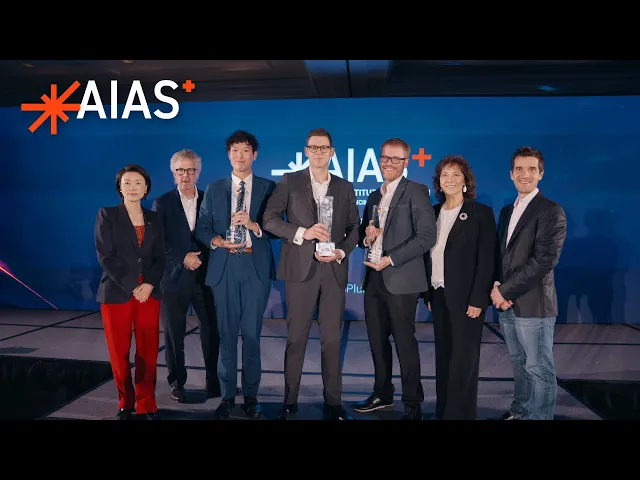
Zhiling “Zach” Zheng, an assistant professor of chemistry at Washington University in St. Louis, showed how AI can help scientists discover and create new materials in the laboratory, including those that can extract drinking water from dry desert air. His materials discovery research earned him recognition as a finalist for the 2026 Chen Institute and Science Prize for AI Accelerated Research.
Daphne Koller, founder and CEO of the drug discovery company Insitro, described combining clinical data with cell experiments to investigate disease and select drug targets.
These examples show how AI can help researchers choose what to investigate next. Establishing what those possibilities mean requires different methods for each field, from mathematical proof to laboratory experiments and clinical evaluation.
How can we establish confidence in the results?
“The challenge is that AI is outpacing our ability to create molecules that we can test in the lab,” Collins told our team. Researchers still have to make and evaluate the compounds AI proposes.
Our co-founder Tianqiao Chen, who also founded Apodex, framed a related distinction in his lecture:
“Producing an answer and recognizing a good one are different abilities.” He argued for investment in the experiments, human expertise, and records needed to evaluate AI-generated proposals.
Heng Ji, a computer science professor at the University of Illinois Urbana-Champaign, described AI approaches that led to publications but overlooked relevant chemical knowledge or were not adopted by scientific collaborators. Her examples highlighted why domain expertise must shape AI systems from the beginning, and why rigorous experimental work needs time and support.
Stanford University psychiatrist, neuroscientist, and Nobel laureate Karl Deisseroth explained how experiments that selectively change the activity of brain cells or connections can distinguish observation from causation. Across these examples, verification means choosing tests that fit the claim and its intended use.
We also invited attendees to reflect on these questions through the voluntary AIAS+ Pulse Poll. Asked where the next bottleneck would be if AI made research ten times faster, 71% of respondents selected “Verifying the results.” In a separate question about who should have the final say on an AI-made discovery’s credibility, 73% chose independent scientists who reproduce it. *(These responses offer a snapshot of respondents’ views, rather than a representative survey).
Where is AI moving from research into practice?
The wider program connected these scientific questions with the realities of building and using AI. Workshops covered financial markets and institutions, neuroscience, and circuit, chip, and semiconductor design. Industry sessions paired investor panels with startup presentations on topics including autonomous laboratories, materials discovery, and physical interaction.
A separate track on the science-AI cycle brought together topics ranging from crop engineering and molecular discovery to automation and neurotechnology. These sessions broadened the conversation beyond model capabilities to the real-life settings in which AI must work.
The Friday Evening Exchange combined a startup competition, conversation, and posters. Together, these formats created opportunities for researchers, founders, and investors to examine emerging ideas from different perspectives.
Saturday’s workshops extended the program to AI-assisted research workflows, embodied AI, lifelong learning agents, and evaluation in high-stakes domains. The final panel returned to verification, reliability, and public trust, linking the technical program with the wider responsibilities of AI-assisted discovery.
How is the scientist’s role changing?
“AIs have become very good at producing answers, but not great at producing understanding,” Tao told our team. He distinguished checking a proof from understanding what it explains or why it matters.
Toby Walsh, a professor of artificial intelligence at UNSW Sydney, explored how AI might also help explain mathematical proofs and develop new concepts through interactive conversations. Their perspectives leave an important question open: How will people and AI contribute to scientific understanding?
Universities also shape how researchers use AI and assess its results. In a thought experiment about the university of the future, Beong-Soo Kim, president of the University of Southern California, asked: “Can scientific claims be independently verified when the underlying AI systems are proprietary?” His scenario raised questions about publication rights, ownership, and academic freedom in university-industry partnerships.
What does meaningful progress look like?
The needs of people affected by technology must help define success. Sergey Stavisky, a neuroscientist at the University of California, Davis, discussed preserving a person’s intended words in AI-assisted speech restoration. His research received the 2026 Chen Institute and Science Prize for AI Accelerated Research. “The choice of the words we use, that subtle nuance, that’s part of who we are as people,” he told our team.
Nicholas C. Jacobson, an associate professor of biomedical data science, psychiatry, and computer science at Dartmouth’s Geisel School of Medicine, was recognized as a finalist for the 2026 Chen Institute and Science Prize for AI Accelerated Research for his work on AI-delivered psychotherapy. At AIAS+, he discussed the need for clinical evaluation of AI designed for mental health care. Stanford University psychologist Shannon Wiltsey Stirman described AI applications for therapist training and assessing treatment delivery. For these uses, evaluation must consider safety and benefits for patients, alongside technical performance.
Who will shape the next chapter of discovery?
AIAS+’s research program brought emerging researchers, including doctoral and college students, into the scientific exchange. The conference received 102 paper submissions, twice last year’s total, and accepted 58 through a peer-review process involving 127 reviewers.
Research topics ranged from AI agents for scientific discovery and safety evaluation to biomedical applications and neuroscience. Best paper presentations highlighted scientific contributions, while poster sessions and mentor tables offered opportunities to discuss methods, exchange feedback, and connect across disciplines.
High school students also shared research through the Student Showcase. Poster awards recognized projects exploring AI-assisted stuttering detection and speech reconstruction, and AI-enabled robotic cell manufacturing. The showcase offered students early opportunities to present their work, engage with researchers, and explore possible paths in science.
The conversation extended to how education prepares people to work with AI. Sarah Soule, dean of the Stanford Graduate School of Business, moderated a panel with Stanford GSB professors Amir Goldberg and Yuyan Wang on AI in education and training. The discussion explored how teaching can help students question assumptions, evaluate results, and use AI thoughtfully
What can we take forward together?
In her closing remarks, our co-founder Chrissy Luo connected trustworthy science to discoveries people can understand and use to improve lives. “That’s why we need to strengthen the tools, methods, and standards that make scientific discoveries trustworthy,” she said.
How can we work together to turn AI’s potential into discoveries that advance knowledge and improve lives?
Across AIAS+, speakers illustrated how different fields establish confidence in a result from mathematical proof to laboratory experiments and clinical evaluation. As AI expands the possibilities researchers can investigate, we must also strengthen the expertise, methods, and resources needed to evaluate them.
Drawing on those discussions, we invite researchers, institutions, and funders to use four questions to guide the AI-assisted research they conduct, support, or evaluate:
What is being claimed? State what the work proposes or demonstrates, what evidence supports it, and what remains uncertain.
How should it be tested? Identify the proof, experiment, or evaluation appropriate to the claim and its intended use.
Who can assess it independently? Identify the relevant expertise and the information needed to evaluate the result.
What resources are needed? Plan for the people, time, facilities, and funding required for that evaluation.
As recordings become available, revisit the talks to explore approaches beyond your own field. Through the symposium feedback survey, tell us which topics deserve more attention and who you’d like us to invite next year.
Save the date for AIAS+ 2027: October 21-23, 2027 in San Francisco. We’re delighted to share that Nobel laureates Carolyn Bertozzi of Stanford University and Frances Arnold of Caltech have already agreed to join us as plenary lecturers.
We look forward to welcoming you back to share what you’ve learned and help turn AI’s promise into discoveries that improve lives.
###
Loading...
Loading...


