Loading...
Loading...
Loading...

eWEAR: Optogenetics Pioneer Karl Deisseroth Meets his Latest Challenge: Writing a Book

Meeting Reports

|
Dec 13, 2022

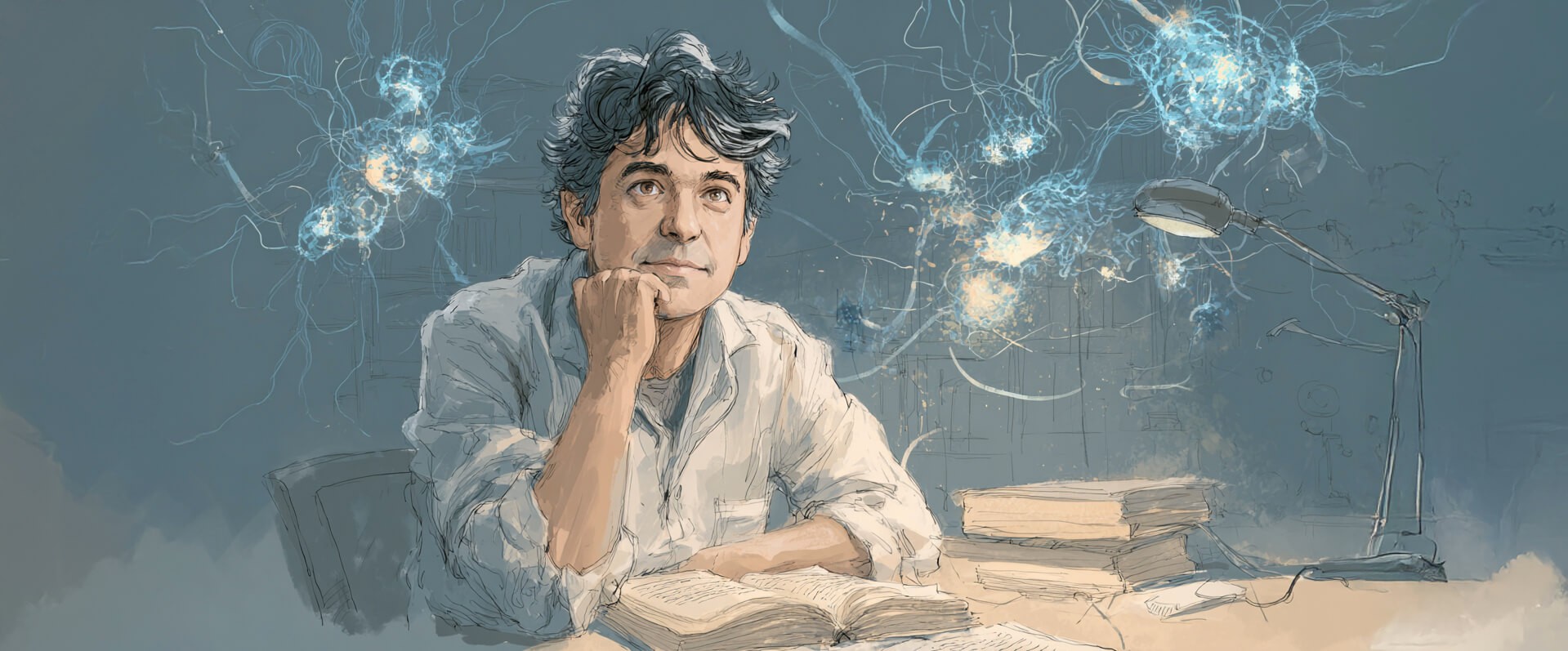
By cleverly leveraging a protein typically found in algae, optogenetics techniques allow researchers to stimulate particular groups of neurons simply by shining a light on them. They’ve allowed neuroscientists to trigger specific memories in mice, manipulate relationships among prairie voles, and make mice perceive scents that don’t actually exist, among thousands of other scientific achievements. And though it took the efforts of countless scientists, spanning over a century, to make the approach a reality, there’s one name everyone associated with it: Karl Deisseroth.

Deisseroth is a professor of bioengineering and psychiatry at Stanford, where he helms an enormous laboratory that continues to push the boundaries of what optogenetics can do. He recently won a Horwitz Prize and a Lasker Prize—seen as bellwethers for the Nobel—for his central role in the development of optogenetics. And somehow he still finds time to work as a practicing psychiatrist, specializing in autism and mood disorders. Microscopic proteins and human minds might seem quite disparate foci around which to center one’s work. But Deisseroth doesn’t see himself as pursuing two separate careers. He attacks the problem of psychiatric illness from two sides, working to understand the biological roots of mental illness as he contends with its effects on the lives of his patients.

Lately, Deisseroth has put on a third hat, besides those of the researcher and the psychiatrist: that of the writer. In 2021 he published Projections: A Story of Human Emotions, a work of literary non-fiction described as an “enthralling masterpiece” by Nobel Laureate Robert Lefkowitz. In the book, which is aimed at the general public, Deisseroth weaves together the threads of genetics, neuroscience, and mental health and draws heavily on his career and personal history. As accomplished as Deisseroth is, he faces this new venture with some trepidation. “I felt very vulnerable last year when it was coming out,” Deisseroth said, in conversation with Angela McIntyre at Stanford’s eWear Symposium in September. “So actually, it’s a relief every time somebody says it wasn’t a total disaster.”

The book functions, in some sense, as an argument for Deisseroth’s bifurcated career—in each of its chapters, he knits together optogenetics research and clinical anecdotes to tell the story of a particular dimension of human emotional life. This integrative thesis is present even in the book’s title, which Deisseroth described at the symposium as a “sort of triple entendre.”

Read the full article

By cleverly leveraging a protein typically found in algae, optogenetics techniques allow researchers to stimulate particular groups of neurons simply by shining a light on them. They’ve allowed neuroscientists to trigger specific memories in mice, manipulate relationships among prairie voles, and make mice perceive scents that don’t actually exist, among thousands of other scientific achievements. And though it took the efforts of countless scientists, spanning over a century, to make the approach a reality, there’s one name everyone associated with it: Karl Deisseroth.

Deisseroth is a professor of bioengineering and psychiatry at Stanford, where he helms an enormous laboratory that continues to push the boundaries of what optogenetics can do. He recently won a Horwitz Prize and a Lasker Prize—seen as bellwethers for the Nobel—for his central role in the development of optogenetics. And somehow he still finds time to work as a practicing psychiatrist, specializing in autism and mood disorders. Microscopic proteins and human minds might seem quite disparate foci around which to center one’s work. But Deisseroth doesn’t see himself as pursuing two separate careers. He attacks the problem of psychiatric illness from two sides, working to understand the biological roots of mental illness as he contends with its effects on the lives of his patients.

Lately, Deisseroth has put on a third hat, besides those of the researcher and the psychiatrist: that of the writer. In 2021 he published Projections: A Story of Human Emotions, a work of literary non-fiction described as an “enthralling masterpiece” by Nobel Laureate Robert Lefkowitz. In the book, which is aimed at the general public, Deisseroth weaves together the threads of genetics, neuroscience, and mental health and draws heavily on his career and personal history. As accomplished as Deisseroth is, he faces this new venture with some trepidation. “I felt very vulnerable last year when it was coming out,” Deisseroth said, in conversation with Angela McIntyre at Stanford’s eWear Symposium in September. “So actually, it’s a relief every time somebody says it wasn’t a total disaster.”

The book functions, in some sense, as an argument for Deisseroth’s bifurcated career—in each of its chapters, he knits together optogenetics research and clinical anecdotes to tell the story of a particular dimension of human emotional life. This integrative thesis is present even in the book’s title, which Deisseroth described at the symposium as a “sort of triple entendre.”
Read the full article

Loading...
Loading...
Loading...
Loading...
Loading...
Loading...
Loading...

Cornerstone Partnerships

Frontier Labs

Documentary

Loading...

AI Prize

Chen Scholars Program

Training Programs

Stanford IPL

Loading...

AIAS 2025

Conference Program

Conference Partners

Conference Reports

About

Founders’ letter

Our Philanthropy

Vision

Team

Join Us

Newsroom

Chen Institute blog

Newsletter

Annual Report

© 2025 Tianqiao and Chrissy Chen Institute

Terms of Use

Privacy Policy

Contact us

Newsletter

Subscribe

We're Hiring!

Loading...

Cornerstone Partnerships

Frontier Labs

Documentary

Loading...

AI Prize

Chen Scholars Program

Training Programs

Stanford IPL

Loading...

AIAS 2025

Conference Program

Conference Partners

Conference Reports

About

Founders’ letter

Our Philanthropy

Vision

Team

Join Us

Newsroom

Chen Institute blog

Newsletter

Annual Report

© 2025 Tianqiao and Chrissy Chen Institute

Terms of Use

Privacy Policy

Contact us

Newsletter

Subscribe

We're Hiring!

Loading...

Cornerstone Partnerships

Frontier Labs

Documentary

Loading...

AI Prize

Chen Scholars Program

Training Programs

Stanford IPL

Loading...

AIAS 2025

Conference Program

Conference Partners

Conference Reports

About

Founders’ letter

Our Philanthropy

Vision

Team

Join Us

Newsroom

Chen Institute blog

Newsletter

Annual Report

© 2025 Tianqiao and Chrissy Chen Institute

Terms of Use

Privacy Policy

Contact us

Newsletter

Subscribe

We're Hiring!