Loading...
Loading...
Loading...

eWEAR: HAPTIC BRACELET: A mechanistic understanding of a wrist-worn haptic device

Meeting Reports

|
Oct 23, 2022

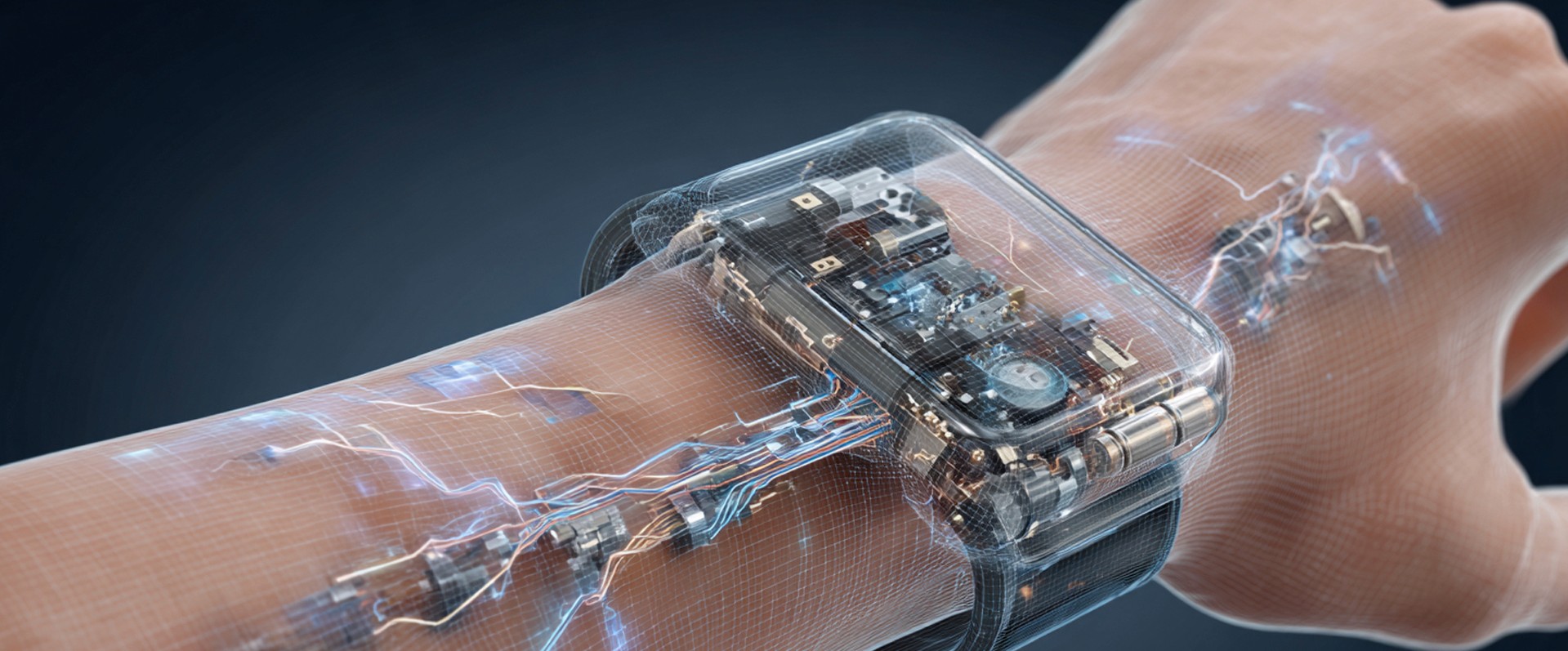
What if this could be achieved by wearing specialized haptic devices on the arm/shoulder of both the users that recognize touch gestures and transfer that perception between the users!

Tactile sensation has gained paramount importance in perceiving reality for humans. The sense of touch feels most realistic when we simulate what happens in the real world: our fingertips deform as we touch or squeeze a stiff object. Since devices can be designed in several ways, we are not constrained to simply mimic what happens, but also create touch from virtual objects.

Most conventional haptic devices are designed to provide a sense of touch to the user during virtual reality interactions, in which persons wear head-mounted displays that isolate them from the real world. However, with augmented reality (AR), a person can see both the real world and the virtual world and needs to switch between real and virtual world interactions. Prof. Mine Sarac of Kadir Has University described this major challenge for design of haptic devices to be used in AR. Fingertip devices would limit grasping and touching in the real world. An alternative design is needed to enable persons to perform real interactions occasionally and still take advantage of the sense of touch during virtual interactions.


Read the full article

What if this could be achieved by wearing specialized haptic devices on the arm/shoulder of both the users that recognize touch gestures and transfer that perception between the users!

Tactile sensation has gained paramount importance in perceiving reality for humans. The sense of touch feels most realistic when we simulate what happens in the real world: our fingertips deform as we touch or squeeze a stiff object. Since devices can be designed in several ways, we are not constrained to simply mimic what happens, but also create touch from virtual objects.

Most conventional haptic devices are designed to provide a sense of touch to the user during virtual reality interactions, in which persons wear head-mounted displays that isolate them from the real world. However, with augmented reality (AR), a person can see both the real world and the virtual world and needs to switch between real and virtual world interactions. Prof. Mine Sarac of Kadir Has University described this major challenge for design of haptic devices to be used in AR. Fingertip devices would limit grasping and touching in the real world. An alternative design is needed to enable persons to perform real interactions occasionally and still take advantage of the sense of touch during virtual interactions.

Read the full article

Loading...
Loading...
Loading...
Loading...
Loading...
Loading...
Loading...

Cornerstone Partnerships

Frontier Labs

Documentary

Loading...

AI Prize

Chen Scholars Program

Training Programs

Stanford IPL

Loading...

AIAS 2025

Conference Program

Conference Partners

Conference Reports

About

Founders’ letter

Our Philanthropy

Vision

Team

Join Us

Newsroom

Chen Institute blog

Newsletter

Annual Report

© 2025 Tianqiao and Chrissy Chen Institute

Terms of Use

Privacy Policy

Contact us

Newsletter

Subscribe

We're Hiring!

Loading...

Cornerstone Partnerships

Frontier Labs

Documentary

Loading...

AI Prize

Chen Scholars Program

Training Programs

Stanford IPL

Loading...

AIAS 2025

Conference Program

Conference Partners

Conference Reports

About

Founders’ letter

Our Philanthropy

Vision

Team

Join Us

Newsroom

Chen Institute blog

Newsletter

Annual Report

© 2025 Tianqiao and Chrissy Chen Institute

Terms of Use

Privacy Policy

Contact us

Newsletter

Subscribe

We're Hiring!

Loading...

Cornerstone Partnerships

Frontier Labs

Documentary

Loading...

AI Prize

Chen Scholars Program

Training Programs

Stanford IPL

Loading...

AIAS 2025

Conference Program

Conference Partners

Conference Reports

About

Founders’ letter

Our Philanthropy

Vision

Team

Join Us

Newsroom

Chen Institute blog

Newsletter

Annual Report

© 2025 Tianqiao and Chrissy Chen Institute

Terms of Use

Privacy Policy

Contact us

Newsletter

Subscribe

We're Hiring!